Three-day training programme 9-11 june 2026

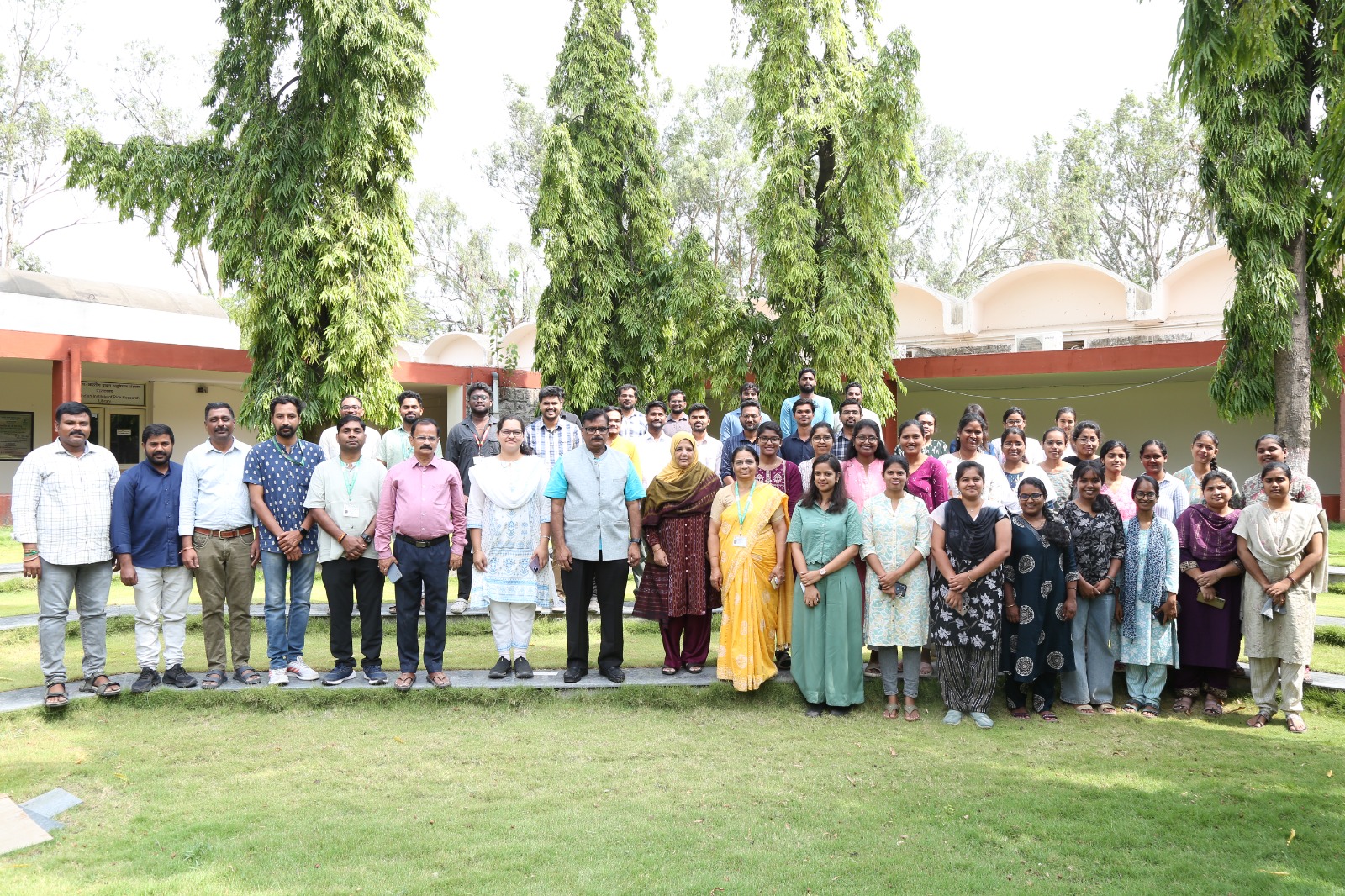
Three-day training programme on “Computational Approaches to Primer Designing for Rice Genomics Research: Hands-on Training” during 9–11 June 2026

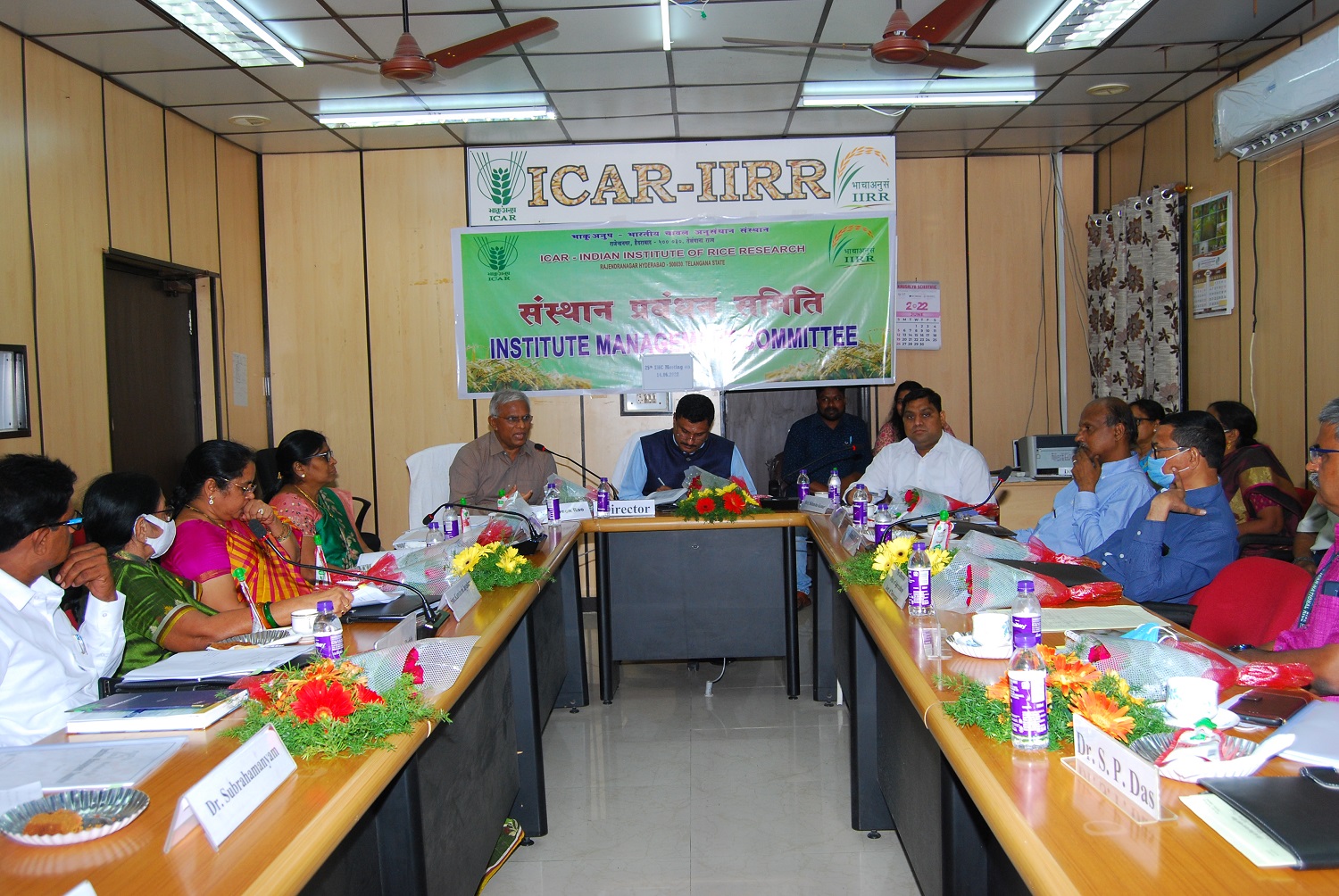
ICAR–Indian Institute of Rice Research (ICAR-IIRR), Hyderabad successfully organized a Three-Day Training Programme on “Computational Approaches to Primer Designing for Rice Genomics Research”, which brought together 70 participants, comprising 80% women and 20% men, including M.Sc. students, Ph.D. scholars, and Post-Doctoral Fellows from leading agricultural universities, central universities, and research institutions across the country. The training programme combined expert lectures with intensive hands-on practical sessions, enabling participants to gain both theoretical understanding and practical skills in computational genomics and primer design. The training programme was coordinated by Drs. C. N. Neeraja, Satendra Kumar Mangrauthia, Kalyani M. Barbadikar, Papa Rao Vaikuntapu, and Amtul WarisParticipants represented premier institutions, including ICAR-IARI (New Delhi and Hyderabad Hub), ICAR-IIOR, PJTAU, UAS Raichur, ANGRAU, Agricultural College Jagtial, S.V. Agricultural College Tirupati, and Malla Reddy University. The training programme served as an excellent platform for scientific learning, skill enhancement, and networking among young researchers. 

During the inaugural programme, Dr M. S. Prasad, Director, ICAR-IIRR, highlighted the significance of capacity-building initiatives in equipping researchers with advanced computational skills required for modern crop improvement research. Dr Amtul Waris, Head TTT, outlined the key Human Resource Development (HRD) activities being undertaken by ICAR-IIRR as per the guidelines of ICAR, New DelhiThis training programme was a part institutes HRD, headed by Dr. Chitra Shankar, Chairperson, HRD. Dr R. M. Sundaram, Director, ICAR-NAARM, emphasized the importance of such programmes in strengthening human resource capabilities and accelerating innovation in agricultural research.  During the inaugural session, distinguished lectures were organized under the NAAS Hyderabad Chapter. Dr. Satendra Kumar Mangrauthia delivered an enlightening lecture on the latest advances in genome editing technologies, emphasizing their transformative potential in crop improvement and climate-resilient agriculture. He elaborated on the scientific principles, regulatory considerations, and translational aspects of genome editing, highlighting the successful development and commercialization of Kamala DRR Dhan 100 as a notable example of technology deployment in rice improvement. Dr. SV Sai Prasad provided an insightful overview of the rice varieties developed by ICAR-IIRR, highlighting their contributions to enhancing productivity, resilience, and grain quality across diverse agro-ecological regions. He also elaborated on the pivotal role of the All India Coordinated Research Project on Rice (AICRP-Rice) in the multi-location evaluation, identification, release, and dissemination of improved rice varieties.  His lecture underscored the significance of the coordinated research network in accelerating varietal development and facilitating the large-scale adoption of superior rice technologies by farming communities across the country.

The programme featured lectures and hands-on training by distinguished scientists including Drs. S. V. Sai Prasad (PS, Plant Breeding and Genetics), G. S. Laha  (PS, Plant Pathology), A. P. Padmakumari  (PS, Entomology), Satendra Kumar Mangrauthia  (PS, Biotechnology), Jyothi Badri  (SS, Plant Breeding and Genetics), Divya Balakrishnan (SS, Plant Breeding and Genetics), Kalyani M. Barbadikar  (SS, Biotechnology) and Papa Rao Vaikuntapu (S, Biotechnology)  (ICAR-IIRR); Dr B. Usha Kiran (SS, Biotechnology, ICAR-IIOR); Dr P Supriya (S, Bioinformatics, ICAR-NAARM); Dr Sona Charles (S, Bioinformatics, ICAR-IISR); Dr Tejas Bosamia (Asst. Prof.  Anand Agricultural University),  Dr Naveen Kumar (Asst. Prof. Central University of Rajasthan); Dr. Ashok Kumar Madikonda ( Asst. Prof.   Central University of Kerala); Dr Shailesh Kumar (Staff Scientist IV, BRIC-NIPGR); and Dr C. Gokulan (M K Bhan Fellow, CSIR-CDFD). The sessions provided participants with valuable exposure to contemporary computational tools and methodologies widely used in rice genomics research. Drs Divya Kattupalli, Sai Krishna M, and Ms Kanika KM from ICAR-IIRR served as resource personnel for practical sessions. 

Dr. V. Papa Rao and Dr. Kalyani M. Barbadikar provided a comprehensive overview of the training programme, outlining its objectives, structure, and emphasized the importance of active participation and interdisciplinary learningThe valedictory session featured an engaging interaction by Chief Guest, Dr. P. K. Mandal, Principal Scientist, Biotechnology, ICAR-National Institute of Plant Biotechnology (NIPB). Drawing upon his extensive research experience, he discussed strategies for identifying impactful research questions, formulating scientifically sound hypotheses, and addressing complex biological problems through a structured and interdisciplinary approach. He underscored the importance of critical thinking, innovation, and resilience in scientific inquiry, while advocating a solution-oriented mindset for overcoming research challenges. 


Rice Carbo Tracker

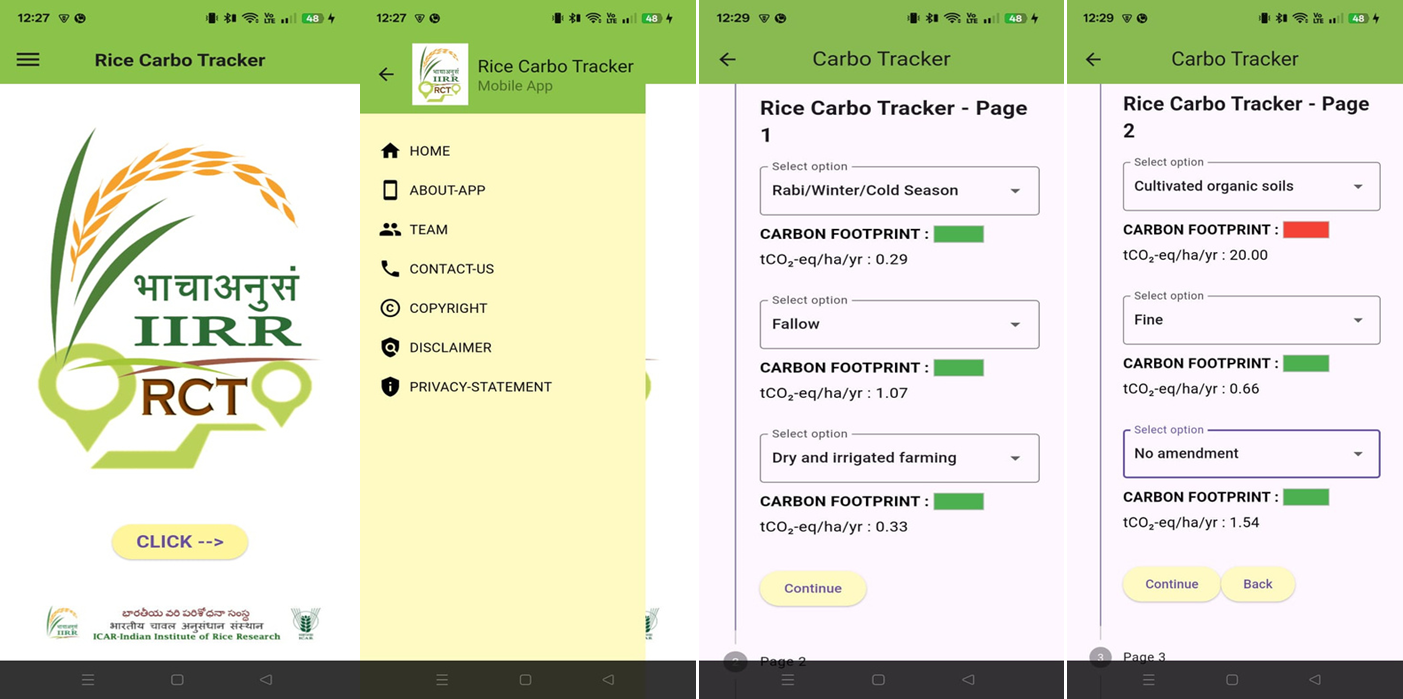
Rice Carbo Tracker App 

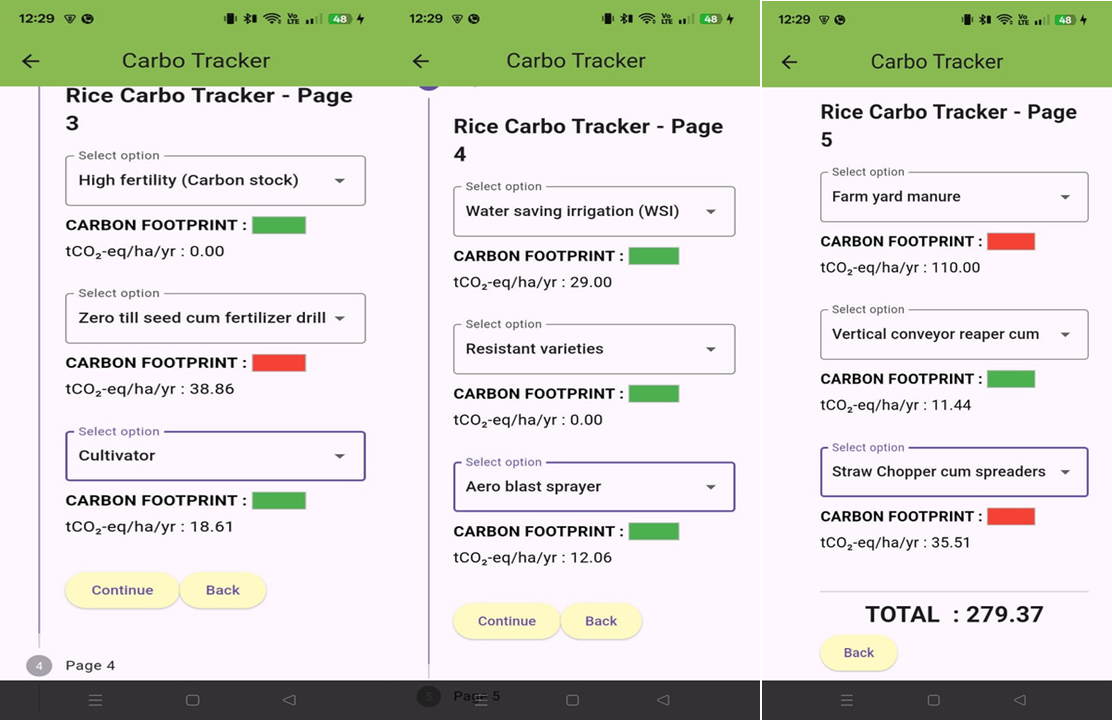
Rice carbon Tracker app was developed with interactive simple dropdown boxes starting from selection of season, type of land, farming method, type of soil with colour, texture, amendments, fertility etc, land preparation, irrigation methods etc. each selection gives green and red colours representing carbon foot prints along with values. Finally displays total values. This app will be further validated in major rice growing areas.


NAPSRI-App

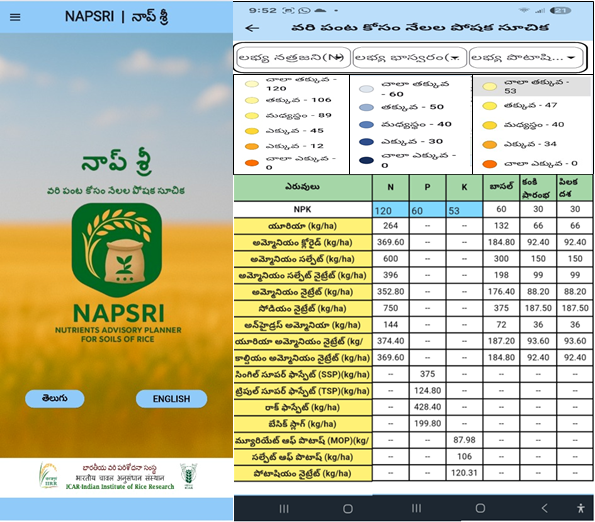
Nutrients Advisory Planner for Soils of Rice 

నాప్ శ్రీ మొబైల్ యాప్ (భూసార పరీక్ష కిట్ అనుబంధ యాప్) – వరి పంట కోసం నేలల పోషక సూచిక

About - Soil testing is key to balanced fertilization and plant nutrition. ICAR-IIRR developed Rapid Soil Testing Kitfor testing soil health. The kit provides rapid testing techniques for soil physical, chemical and biological parameters. The Soil quality testing kit offers simplified methods for determination of available nutrients from soils and it is rapid, fairly accurate chemical tests. This NAPSRI App computes therequirement of nutrients based on soil test generated available nutrients and suggests the Fertiliser doses at important stages of Rice crop. This App is available in Telugu and English languages. This app will greatly benefit farmersby providing instant nutrient recommendations in the form of fertiliser dosesat different stages based on soil test results from the soil kit.

పి.బ్రజేంద్ర, బి.శైలజ, వి.మానస, ఆర్. గోబీనాథ్, టి. కపిల్, మంగళ్ దీప్ టుటి, సతేంద్ర మంగ్రోతియా, ఎం.బి.బి.ప్రసాద్ బాబు, ఆర్.మహేంద్ర  కుమార్ మరియు  ఆర్. మీనాక్షి సుందరం 

ఈ నాప్ శ్రీ యాప్, భారతీయ వరి పరిశోధన  సంస్థ వారు రూపొందించిన భూసార పరీక్ష కిట్ నుంచి వచ్చిన ఫలితాల ఆధారంగా వరి పంట కి అవసరమయిన పోషకాల ని గణించి, వివిధ దశలలో ఎరువుల మోతాదుల రూపంలో  సిఫార్సులను అందించడం ద్వారా రైతులకు ఎంతో ప్రయోజనం చేకూరుస్తుంది. ఈ యాప్ తెలుగు మరియు ఆంగ్ల భాషలలో అందుబాటులో ఉంది.

For App Link - Click Here


NGS Database

Welcome to ICAR-IIRR NGS Database

The ICAR-Indian Institute of Rice Research (ICAR-IIRR) proudly presents this comprehensive Next-Generation Sequencing (NGS) database, designed to facilitate cutting-edge research in rice genomics. This platform serves as a centralized repository for sequencing data generated by ICAR-IIRR and its team of scientists, contributing to advancements in molecular breeding, biofortification, genetic diversity analysis, and crop improvement. Our database provides researchers, breeders, and biotechnologists with high-quality sequencing datasets, enabling in-depth genomic studies that support the development of climate-resilient and high-yielding rice varieties. By offering access to meticulously curated data, this resource plays a crucial role in accelerating innovations in rice research and biotechnology. Through this initiative, ICAR-IIRR aims to foster collaboration among scientists and institutions, promote open-access genomic resources, and drive scientific breakthroughs in agricultural genomics. Whether you are exploring gene expression patterns, SNP variations, structural genomics, or functional annotations, this database is a valuable tool to aid your research. We invite researchers, students, and industry professionals to explore, analyze, and utilize the NGS data for advancing rice science and ensuring food security. Let’s work together towards a future of sustainable and resilient agriculture!

Click Here

Varietal Information system


SEARCH